
Dental bridges Telford
Natural-looking bridges to replace missing teeth, restore your bite, and help you smile confidently — with clear options on materials, aesthetics, and long-term care.
- Careful assessment to confirm the best way to replace the gap and protect nearby teeth.
- Tooth-coloured materials for a natural finish and a comfortable, balanced bite.
- Long-term focus — with advice on cleaning under the bridge and keeping gums healthy.
Quick facts
Dental bridges, at a glance
Bridges replace one or more missing teeth by fixing a natural-looking tooth to neighbouring teeth (or implants). We focus on a comfortable bite, a seamless shade match, and a design that’s easy to keep clean.
What it is
Dental bridges, explained.
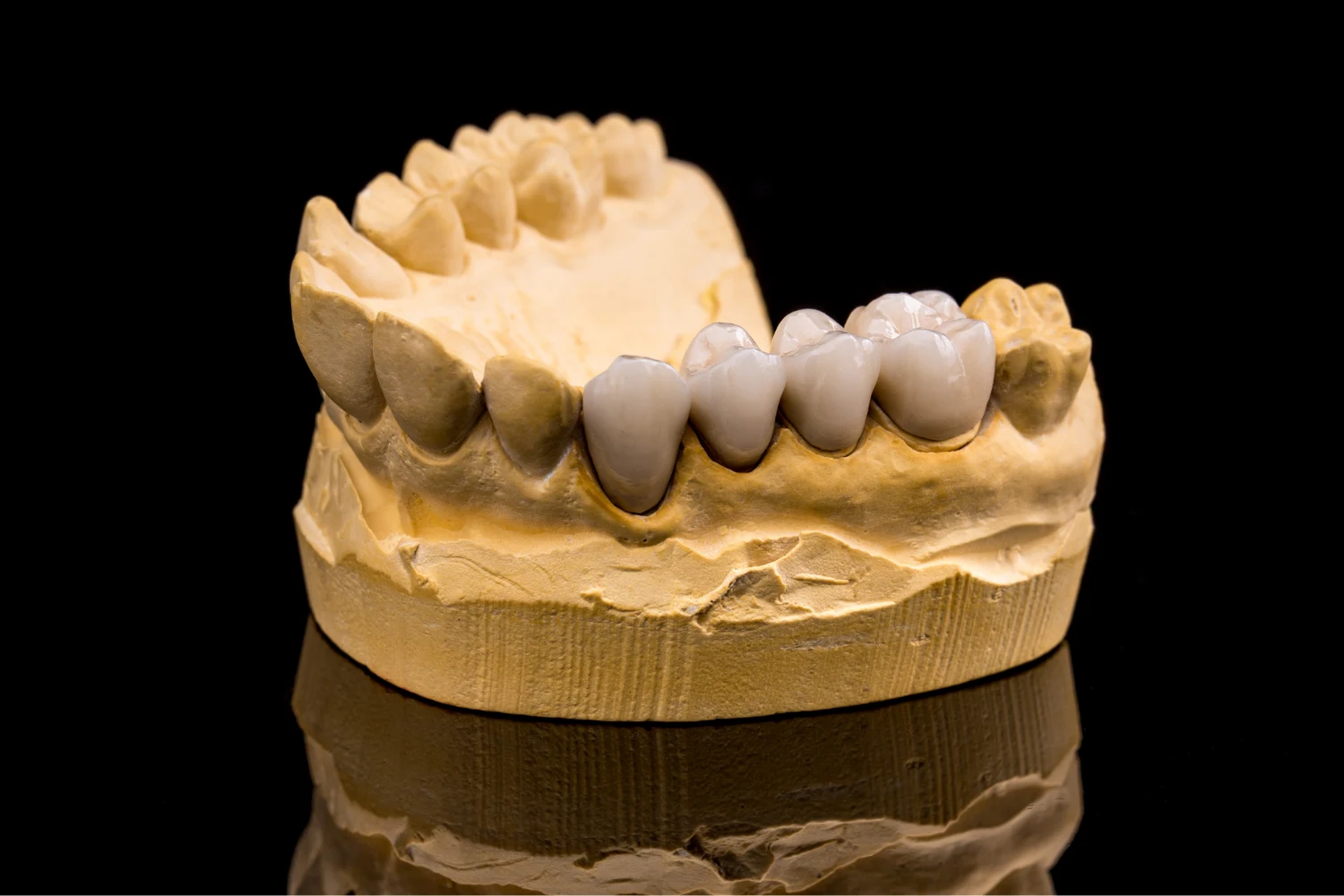
Dental bridges replace a missing tooth (or teeth) by “bridging” the gap with a custom-made tooth that’s fixed in place. Most bridges are supported by the neighbouring teeth (or occasionally an implant), then shaped and shaded to look natural. We assess your bite, take impressions or scans, and design a bridge that feels comfortable, looks seamless, and supports everyday chewing.
-
Replace missing teeth Close the gap with a fixed, natural-looking tooth.
-
Stabilise your bite Help reduce drifting and bite changes over time.
-
Restore chewing comfort Even contact so meals feel more predictable again.
-
Blend naturally Shaded and shaped to match your smile.
A bridge needs stable support and a balanced bite. We check the health of the neighbouring teeth and gums, discuss material choices, and plan the shape so cleaning stays manageable. With good home care and regular check-ups, bridges can be a dependable way to restore function and appearance without a removable option.
What happens during dental bridge treatment?
Assessment & planning
We’ll examine the gap, the neighbouring teeth, and your gum health, and take X-rays if needed. We’ll explain whether a bridge is suitable, the type of bridge that fits your situation, and what to expect across appointments.
Know your options
Dental bridges vs crowns.
Bridges and crowns both restore your smile — but they solve different problems. A bridge replaces a missing tooth (or teeth) by anchoring to neighbouring teeth or an implant. A crown protects and restores a damaged tooth by covering it. We’ll assess your bite, gum health, and goals, then recommend the option that’s most predictable long term.
A bridge fills a gap, restores chewing, and helps prevent neighbouring teeth drifting.
Replace missing teeth, restore balance.
A dental bridge is a fixed restoration that replaces one or more missing teeth. It’s held in place by the teeth next to the gap (or sometimes an implant), and it’s designed to look natural, feel stable, and support a comfortable bite.
-
When it’s recommended When a tooth is missing and the supporting teeth/gums are healthy enough to anchor a bridge.
-
What it improves Chewing confidence, smile appearance, and stability — helping reduce unwanted tooth shifting.
-
How we choose it We check the bite, the size of the gap, and the best design for strength and easy cleaning.
When a tooth is compromised, a crown can restore strength and reduce fracture risk.
Cover the tooth, strengthen it.
A crown is a custom-made cap that fits over the tooth to restore strength, shape, and function. It’s recommended when a tooth has a large restoration, significant decay, cracks, or has become structurally weaker — where a simple repair may not be durable enough.
-
When it’s recommended Large restorations, cracks, worn teeth, or when the tooth needs extra reinforcement.
-
What you gain Improved strength for chewing and better protection against future fracture.
-
Finish & longevity Custom shade and fit — often the most durable option when the tooth is compromised.
Good to know
Dental bridges FAQs
Straight answers to the questions we hear most about dental bridges in Telford — suitability, comfort, care, and what to expect.
A quick overview
Assess, plan, prepare supports, fit bridge, adjust bite, show cleaning routine.
01 When is a dental bridge recommended?
A bridge is recommended when you’re missing a tooth (or teeth) and want a fixed replacement.
- Neighbouring teeth are healthy enough to support a bridge
- You want to restore chewing and appearance without a removable option
- There’s a gap causing drifting, bite changes, or food trapping
We’ll assess the bite, gum health, and supports before recommending a design.
02 Does getting a bridge hurt?
Bridge preparation is usually comfortable with local anaesthetic. You may feel pressure, but not pain.
Afterwards, mild tenderness or sensitivity can happen briefly while teeth and gums settle.
03 How long do dental bridges last?
Longevity depends on design, bite forces, and daily cleaning around the supports.
- Brush twice daily and clean under the bridge every day
- Attend check-ups so we can monitor margins and gum health
- If you grind, a night guard can help protect restorations
04 How do I clean under a dental bridge?
You’ll need to clean under the false tooth (pontic) where a normal floss thread can’t pass through.
- Use superfloss or a floss threader to sweep under the bridge
- Interdental brushes may help around the supporting teeth
- A water flosser can be a useful extra, but not a replacement
We’ll show you the best technique for your specific bridge design.
05 What’s the difference between a bridge and an implant?
A bridge is supported by neighbouring teeth (or sometimes an implant), while an implant replaces the tooth root and supports a crown.
We’ll explain pros and cons for your situation — including bone levels, adjacent tooth condition, time, and budget.
06 When might I need crowns as part of a bridge?
Many bridges use crowns on the supporting teeth to anchor the replacement tooth securely.
- If the support teeth already have large fillings
- If extra strength is needed for the bite
- If the bridge design requires full coverage for stability
We’ll confirm the best design and show you how it will look and function.