Dental implants Telford
Replace missing teeth with a secure, natural-looking implant and crown — planned carefully, placed gently, and designed to last.
- Detailed assessment to confirm suitability and plan the safest, most predictable result.
- Natural-looking crowns matched to your smile for confident chewing and speaking.
- Long-term aftercare advice so your implant stays healthy, stable, and easy to clean.

Quick facts
Dental implants, at a glance
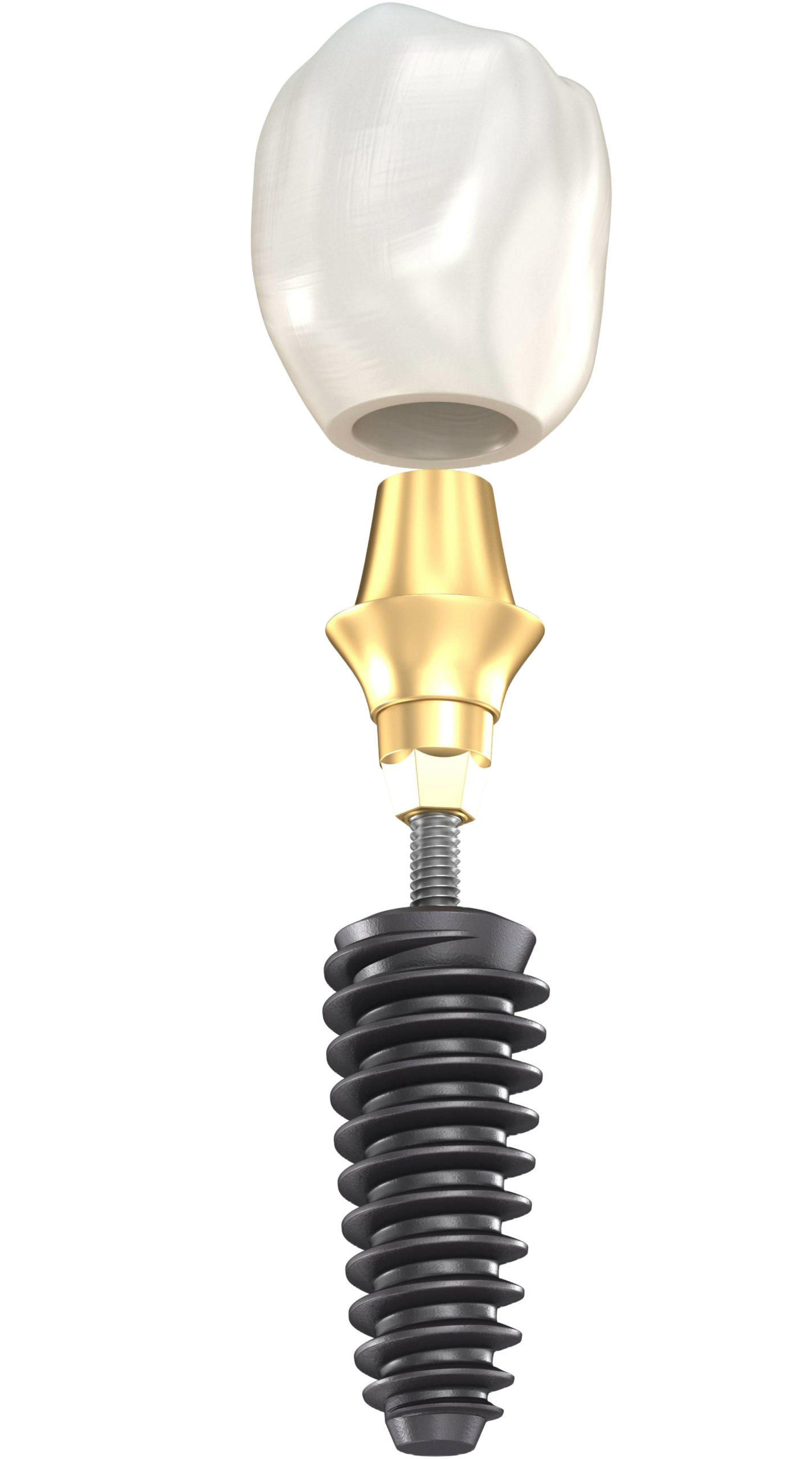
Implants replace missing teeth with a small titanium post and a natural-looking crown. We focus on careful planning, gentle placement, and a result that feels secure, comfortable, and easy to care for long term.
What it is
Dental implants, explained.
A dental implant replaces a missing tooth root with a small titanium post that integrates with the jawbone. Once healed, we fit a custom crown (or another restoration) to recreate a natural-looking tooth that feels secure when you eat, speak, and smile. If an implant is suitable, it’s a reliable long-term option that avoids trimming down neighbouring teeth.
-
Replace missing teeth Restore function and confidence with a fixed solution.
-
Support bone & bite Help maintain jawbone and keep chewing balanced.
-
Protect adjacent teeth No need to file healthy neighbouring teeth like a bridge.
-
Look & feel natural Custom shade, shape, and a secure, comfortable fit.
After a tooth is lost, the jawbone can gradually shrink over time, which may affect implant options and aesthetics. Early advice helps us plan the safest route — whether that’s an implant right away, preserving the site, or preparing the area first. We’ll assess your health, take X-rays (and scans if needed), then recommend the simplest plan for a stable long-term result.

What happens during dental implant treatment?
Consultation
We listen to what you want to achieve, assess your mouth and gums, and talk through options. If an implant is suitable, we’ll explain the stages, timing, and costs — so you can decide with confidence.
Know your options
Dental implants vs dentures.
If you’re missing a tooth (or several), we’ll look at your goals, bone support, and budget. Implants are fixed and feel closest to natural teeth. Dentures can be a simpler, removable way to restore your smile — and can be a great option when implants aren’t suitable.
Implants replace the root and support a crown for a stable, natural-feeling bite.
Replace the tooth, not just the gap.
An implant is a small titanium post placed in the jaw to act like a replacement root. Once healed, it supports a crown (or helps secure a bridge/denture). It’s designed to look natural, feel secure, and restore confident chewing.
-
When it’s recommended Single missing teeth, multiple gaps, or for stabilising replacement teeth long-term.
-
What you gain A fixed option that feels secure, with a bite designed to feel natural.
-
Care & longevity With good cleaning and check-ups, implants can be a long-lasting solution.
Dentures replace missing teeth and can restore appearance and function without surgery.
Restore your smile, simply.
Dentures are custom-made removable teeth that replace missing teeth and support facial shape. They can be partial (replacing some teeth) or full (replacing all teeth). The fit, bite, and appearance are tailored to you for comfort and confidence.
-
When it’s recommended Multiple missing teeth, changing needs, or when you prefer a removable option.
-
What you gain A cost-effective way to restore appearance and everyday function.
-
Fit & aftercare May need adjustments over time as gums change — we help keep it comfortable.
Good to know
Dental implants FAQs
Straight answers to the questions we hear most about dental implants in Telford — suitability, comfort, timelines, and how to look after your implant long-term.
A quick overview
Assess, plan, place implant, heal, fit your crown — then support long-term with reviews.
01 How do I know if I’m suitable for dental implants?
Most adults are suitable if the gums are healthy and there’s enough bone support for an implant.
- We assess your gums, bite, and overall oral health
- X-rays (and scans if needed) help confirm bone levels and safe placement
- Medical history matters — we’ll tailor the plan around you
If you’re not suitable right now, we’ll explain why and what could make implants possible.
02 Does getting a dental implant hurt?
Implant placement is usually done with local anaesthetic, so you should feel pressure rather than pain.
Afterwards, it’s normal to have some swelling and soreness for a few days, which is typically manageable with standard pain relief.
03 How long does dental implant treatment take?
It depends on healing time and whether extra steps are needed (like grafting or treating gum disease first).
- Consultation and planning
- Implant placement
- Healing phase (so the implant can integrate)
- Final crown, bridge, or denture fitting
We’ll outline your timeline clearly before you start.
04 How long do dental implants last?
Implants are designed to be long-lasting, but longevity depends on excellent cleaning and healthy gums.
- Brush twice daily and clean between teeth every day
- Attend routine reviews so we can monitor gums and bite
- If you grind, a night guard may help protect the crown
The implant itself is very durable; the crown may need replacement in time due to normal wear.
05 What’s the difference between implants and dentures?
Implants are fixed and feel closest to natural teeth, helping restore confidence when you chew and speak.
Dentures are removable and can be a simpler, lower-cost option, but may feel less stable and may need relines or adjustments as gums change.
06 How do I look after a dental implant?
Caring for an implant is similar to caring for natural teeth — the key is keeping the gumline clean.
- Brush carefully around the implant twice daily
- Use interdental brushes or floss daily
- Attend hygiene appointments and reviews for long-term stability
If anything feels loose, sore, or difficult to clean, we’d rather you contact us early.
Aftercare
Caring for your implants.
Implants can last for many years with the right routine. Tap the tips below.

Protect the gums
- Brush twice daily and spend a few extra seconds at the gumline.
- Clean between the teeth every day to remove plaque around the implant.
Choose the right kit
- Interdental brushes often work best — we’ll advise the right size for you.
- A water flosser can help if bridges or awkward angles make cleaning tricky.
Keep them strong
- Attend regular hygiene visits so we can clean around the implant safely.
- If you clench or grind, a night guard can help protect the crown.
If you notice bleeding gums, a bad taste, or anything feels loose, give us a ring — early checks make all the difference.